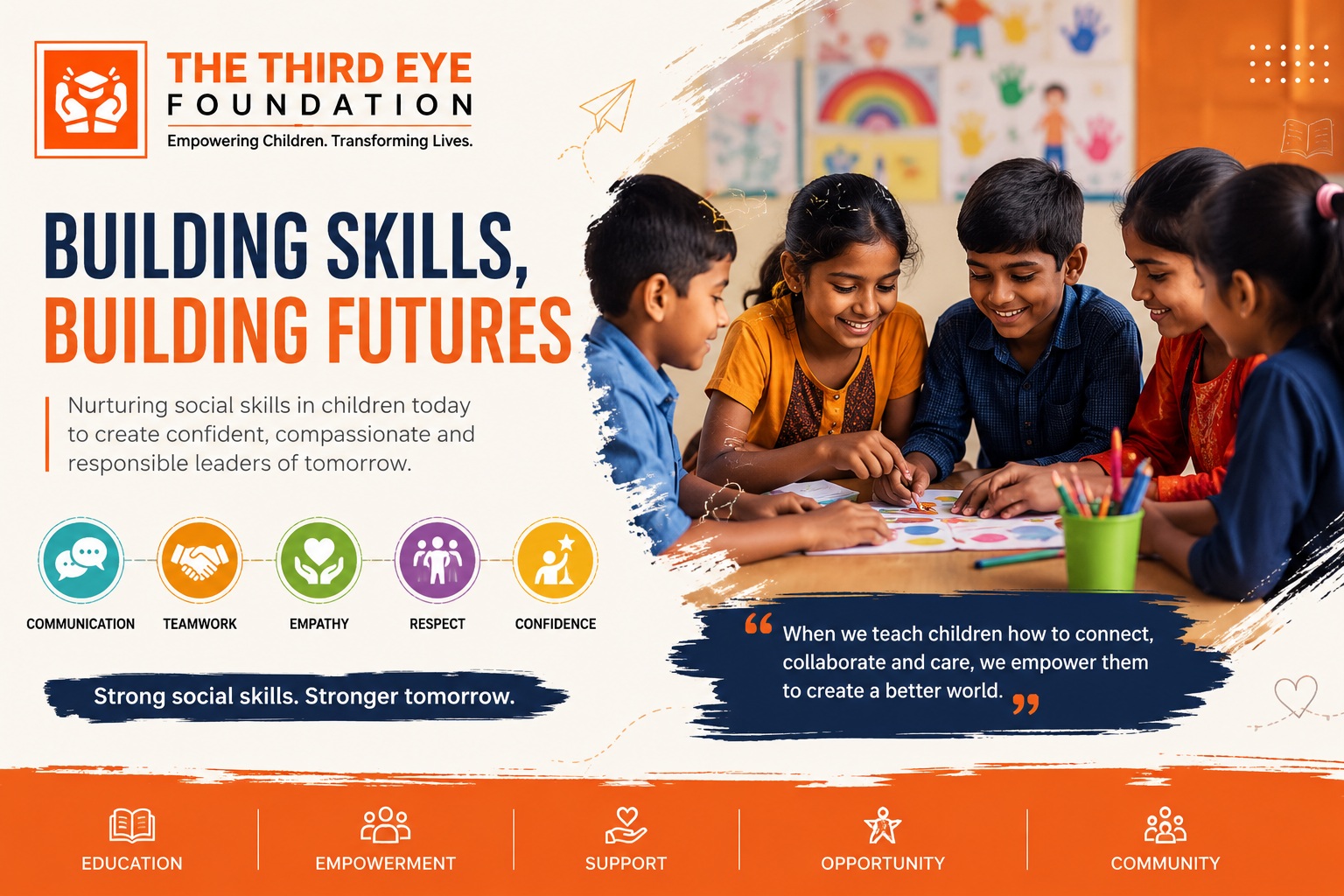

Education is about much more than reading textbooks and passing examinations. For children to thrive in life, they must also learn how to communicate effectively, work with others, understand emotions, and build healthy relationships. These abilities, commonly known as social skills, play a crucial role in a child's overall development.
At The Third Eye Foundation, we believe that every child deserves access not only to quality education but also to opportunities that help them grow into confident, compassionate, and responsible individuals. This is especially important for underprivileged and street-connected children who often face social, emotional, and environmental challenges that can affect their personal growth.
By nurturing social skills from an early age, we empower children to participate actively in their communities, build meaningful relationships, and create better opportunities for their future.
What Are Social Skills and Why Are They Important?
Social skills are the abilities that help children interact positively with others. These include communication, active listening, empathy, cooperation, conflict resolution, self-awareness, and emotional regulation.
Children with strong social skills are better equipped to:
Research consistently shows that children who develop strong interpersonal skills often perform better academically and are more likely to succeed in adulthood, both personally and professionally.
Why Social Skills Matter for Underprivileged and Street Children
Many children living in vulnerable circumstances face limited opportunities for structured social interaction and personal development. Poverty, displacement, lack of access to education, and unstable living conditions can impact their confidence and communication abilities.
For street children and children from disadvantaged communities, social skills can become a powerful tool for transformation. These skills help them:
Through educational support programmes, community learning centres, and child-focused initiatives, NGOs can help bridge these developmental gaps and provide children with opportunities to grow socially and emotionally.
The Connection Between Education and Social Development
Learning environments provide children with daily opportunities to interact, collaborate, and solve problems together. When education incorporates social and emotional learning, children gain valuable life skills alongside academic knowledge.
At The Third Eye Foundation, we recognize that education is one of the most effective tools for empowering children. Beyond literacy and numeracy, educational programmes can nurture qualities such as empathy, teamwork, responsibility, and leadership.
Children who feel safe, respected, and encouraged within learning spaces are more likely to participate actively, develop confidence, and build meaningful relationships with others.
How NGOs Help Children Develop Social Skills
Non-profit organizations play a critical role in creating environments where children can learn, grow, and connect with others.
Through educational outreach programmes, community activities, mentorship opportunities, and group learning experiences, NGOs help children develop essential interpersonal skills that support lifelong success.
Key areas of focus include:
Creating Safe Learning Spaces : Children learn best when they feel secure and supported. Community classrooms and learning centres provide opportunities for children to engage with peers, ask questions, and express themselves freely.
Encouraging Participation : Interactive activities, discussions, and collaborative projects encourage children to share ideas and contribute actively to group learning experiences.
Promoting Inclusion : Inclusive educational environments teach children to respect diversity, appreciate different perspectives, and support one another regardless of background or circumstance.
Building Confidence : By celebrating achievements and encouraging participation, children gain the confidence needed to communicate effectively and pursue their goals.
10 Simple Activities That Help Build Social Skills
Social development does not require expensive resources or complicated programmes. Simple activities can significantly improve communication, cooperation, and emotional intelligence.
1. Group Storytelling
Children take turns contributing to a shared story, encouraging listening, creativity, and collaboration.
2. Team Art Projects
Creating murals, posters, or craft projects together teaches cooperation and collective problem-solving.
3. Circle Discussions
Open discussions allow children to express opinions respectfully while learning to listen to others.
4. Community Service Activities
Participating in neighbourhood clean-ups or community improvement projects helps children develop responsibility and teamwork.
5. Team Sports
Sports encourage cooperation, leadership, discipline, and respect for rules and teammates.
6. Board Games
Games teach patience, turn-taking, decision-making, and healthy competition.
7. Role-Playing Exercises
Children can practise handling real-life situations such as resolving conflicts or helping a friend in need.
8. Peer Mentorship
Older children supporting younger learners fosters leadership, empathy, and responsibility.
9. Collaborative Learning Projects
Group assignments encourage communication, planning, and shared accountability.
10. Problem-Solving Challenges
Activities that require teamwork to find solutions help children develop critical thinking and cooperation.
Teaching Empathy: A Skill That Lasts a Lifetime
Empathy allows children to understand and appreciate the feelings of others. It forms the foundation of kindness, respect, and positive relationships.
Children who develop empathy are more likely to:
Simple conversations about emotions, experiences, and different perspectives can help children strengthen their empathetic abilities.
Helping Children Manage Emotions Effectively
Emotional management is an important part of social development. Children who can identify and regulate their emotions are better equipped to navigate challenges and maintain healthy relationships.
Activities such as role-playing, guided discussions, journaling, and mindfulness exercises help children:
These skills are particularly valuable for children facing difficult life circumstances, enabling them to respond to challenges with confidence and maturity.
The Long-Term Benefits of Strong Social Skills
The impact of social skills extends far beyond childhood. Children who learn to communicate effectively, collaborate with others, and manage emotions are better prepared for future success.
Strong social skills contribute to:
By investing in children's social development today, we help create a generation of compassionate, capable, and confident individuals.
Building a Better Future Through Education and Social Learning
Every child deserves the opportunity to reach their full potential. While academic education provides knowledge, social skills equip children with the confidence and emotional intelligence needed to apply that knowledge meaningfully in the real world.
At The Third Eye Foundation, we are committed to empowering underprivileged and street children through education, mentorship, and holistic development. By creating supportive learning environments and encouraging social growth, we help children build the skills necessary to overcome challenges, pursue their dreams, and become positive contributors to society.
When we invest in children's education and social development, we invest in a stronger, more inclusive, and more compassionate future for everyone.