

Donating blood is one of the simplest and most powerful ways to save lives. While its impact on patients is widely known, many people wonder how blood donation affects the donor’s body. The good news is that blood donation is a safe process, and the human body is remarkably capable of restoring what is given.
Short-Term Effects of Blood Donation
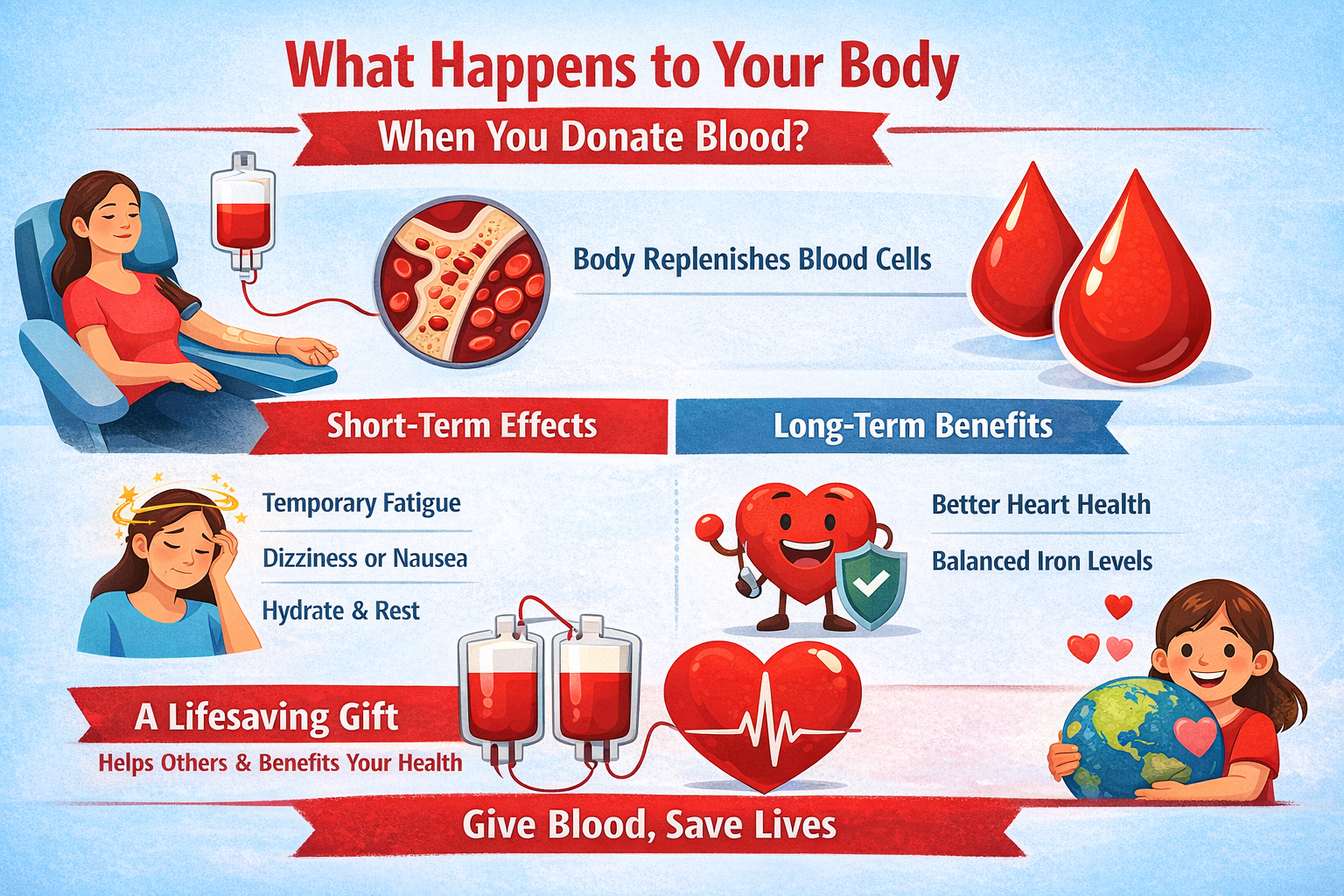
Immediately after donating blood, the body experiences a temporary reduction in red blood cells. These cells are responsible for carrying oxygen throughout the body. Sensing this change, the bone marrow responds quickly by increasing the production of new blood cells to restore balance.
An average adult has enough blood reserves to safely donate one unit (about a pint). However, it takes several weeks for the body to fully replenish red blood cells, which is why a waiting period between donations is essential.
Some donors may briefly feel light-headed, tired, or mildly nauseous after donating. These effects are usually short-lived and occur due to temporary fluid and iron loss. Drinking enough water, eating a nutritious meal, and resting after donation help the body recover smoothly.
With proper hydration and nourishment, the body quickly adapts and returns to normal functioning.
How Blood Donation Benefits the Body in the Long Term
Regular blood donation has been associated with several potential long-term health benefits. Research suggests that people who donate blood consistently may have a lower risk of heart-related conditions. This is partly because blood donation can improve blood circulation and reduce thickness, which may place less strain on blood vessels.
Blood donation also plays a role in maintaining healthy iron levels. Excess iron in the body can contribute to oxidative stress and damage blood vessels. By removing iron-rich blood and allowing the body to regenerate fresh cells, donation may help maintain iron balance—particularly in men, who naturally store more iron than women.
For individuals with low iron levels, donating blood may not always be suitable. Such donors are encouraged to consult healthcare professionals and, if needed, consider iron supplementation before donating.
A Small Act That Makes a Big Difference
Blood donation is not only safe—it is an act of compassion that strengthens communities and saves lives. With proper care before and after donation, donors can give confidently, knowing their body is well-equipped to recover while someone else receives the gift of life.
At The Third Eye Foundation, we believe informed donors create stronger, healthier societies. Your one decision can mean hope for many.