
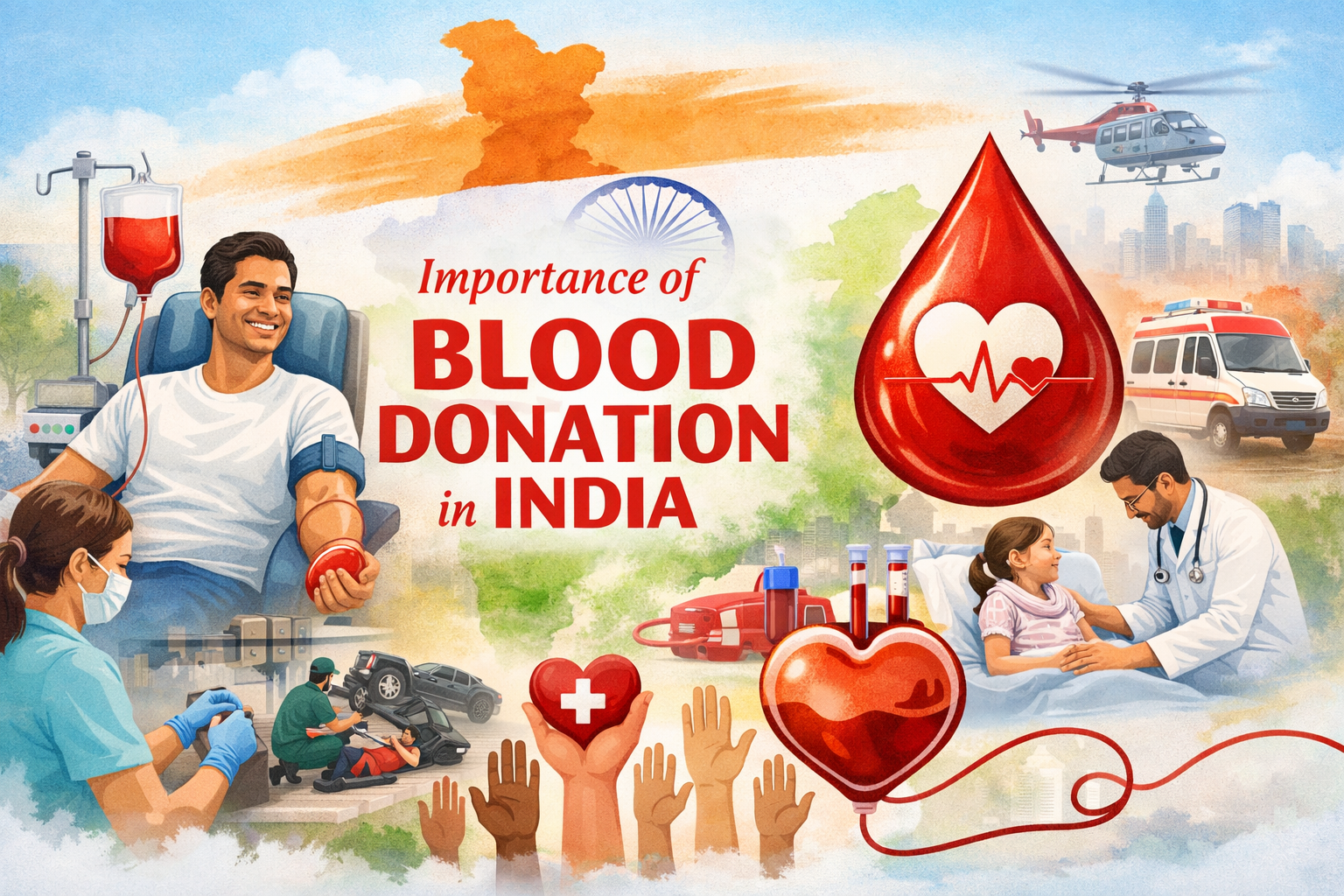

Blood donation is a simple yet powerful humanitarian act that has the ability to save lives and strengthen healthcare systems. In a country like India, where millions of people require blood transfusions every year due to accidents, surgeries, childbirth complications, and chronic illnesses, the need for a consistent and safe blood supply is critical. Despite advancements in medical care, many hospitals still face shortages, making voluntary blood donation an essential social responsibility.
Why Is Blood Donation Important?
Blood is a vital component of medical treatment and cannot be replaced by any artificial substitute. Every donation contributes directly to saving lives, as a single unit of blood can be used to help multiple patients. During emergencies such as road accidents, natural disasters, or complex surgeries, the availability of blood can determine survival outcomes. Regular blood donation also supports patients living with long-term conditions like thalassemia, cancer, and severe anemia who depend on frequent transfusions. A strong culture of voluntary donation ensures that healthcare facilities remain prepared and communities remain resilient.
Who Can Donate Blood?
Most healthy individuals are eligible to donate blood if they meet certain medical criteria. In India, donors are generally required to be between 18 and 65 years of age, maintain a healthy body weight, and have adequate haemoglobin levels. Donors must also be free from infectious and transmissible diseases to ensure the safety of recipients. Blood donation is conducted only after a basic medical screening, and recommended intervals between donations help protect donor health.
Who Should Avoid Donating?
There are situations where blood donation may need to be postponed or avoided altogether. Pregnant and breastfeeding women are usually advised not to donate during this period. Individuals with uncontrolled diabetes, high blood pressure, recent surgeries, or recent tattoos and piercings may also be temporarily ineligible. Those with certain chronic illnesses or a history of substance abuse are evaluated carefully to ensure safety for all involved.
Common Myths About Blood Donation
Many people hesitate to donate blood due to widespread myths and misunderstandings. Some believe the process is painful, while others fear long-term weakness or health risks. In reality, blood donation involves only minor and temporary discomfort, and the body naturally replaces the donated blood within a short time. Strict safety protocols, including the use of sterile, single-use equipment, eliminate the risk of infection. Individuals with well-managed medical conditions such as diabetes or hypertension may still be eligible to donate after medical assessment.
Health Benefits of Blood Donation
Blood donation is not only beneficial for recipients but can also support the health of donors. Donating blood helps regulate iron levels in the body, which may reduce the risk of certain health conditions. It also stimulates the production of new blood cells and promotes overall circulation. Additionally, donors receive basic health screenings during the donation process, which can help identify potential health concerns at an early stage.
How to Prepare for Blood Donation?
Proper preparation ensures a safe and comfortable donation experience. Eating a balanced meal, staying well hydrated, and getting adequate rest before donating are important steps. Avoiding alcohol and smoking prior to donation helps maintain stable blood pressure and hydration levels, making the process smoother for both the donor and medical staff.
What Happens After Donation?
After donating blood, donors are encouraged to rest briefly before leaving the donation site. Drinking extra fluids and avoiding strenuous physical activity for the rest of the day supports quick recovery. Consuming iron-rich foods in the days following donation helps the body replenish blood levels efficiently.
How Can You Help?
Supporting blood donation goes beyond donating blood alone. Individuals can play an active role by encouraging friends and family to become donors, volunteering at blood donation camps, or helping organize awareness drives in collaboration with hospitals and nonprofit organizations. Collective community participation is essential to maintaining a stable blood supply.
Conclusion
Blood donation is a selfless act that requires minimal effort but delivers life-saving impact. As India continues to face increasing healthcare demands, the importance of voluntary blood donation cannot be overstated. By choosing to donate blood and inspiring others to do the same, individuals contribute to a compassionate movement that saves lives, strengthens communities, and builds a healthier nation for the future.