

In many parts of India, girls continue to face social, economic, and cultural barriers that limit their educational opportunities. While access to schooling is essential, true empowerment goes beyond academics alone. Extracurricular activities play a vital role in nurturing confident, capable, and well-rounded young girls by supporting their emotional, social, and intellectual growth.
By creating opportunities beyond the classroom, extracurricular engagement allows girls to explore their talents, express themselves freely, and develop life skills that prepare them for the future.
Why Extracurricular Activities Matter for Girls
For girls from underprivileged communities, education represents hope - a chance to overcome inequality and build a better life. However, textbooks alone cannot address challenges such as low self-confidence, gender bias, or limited exposure. Activities such as sports, arts, debates, music, and science clubs provide safe and inclusive spaces where girls can learn, collaborate, and grow holistically.
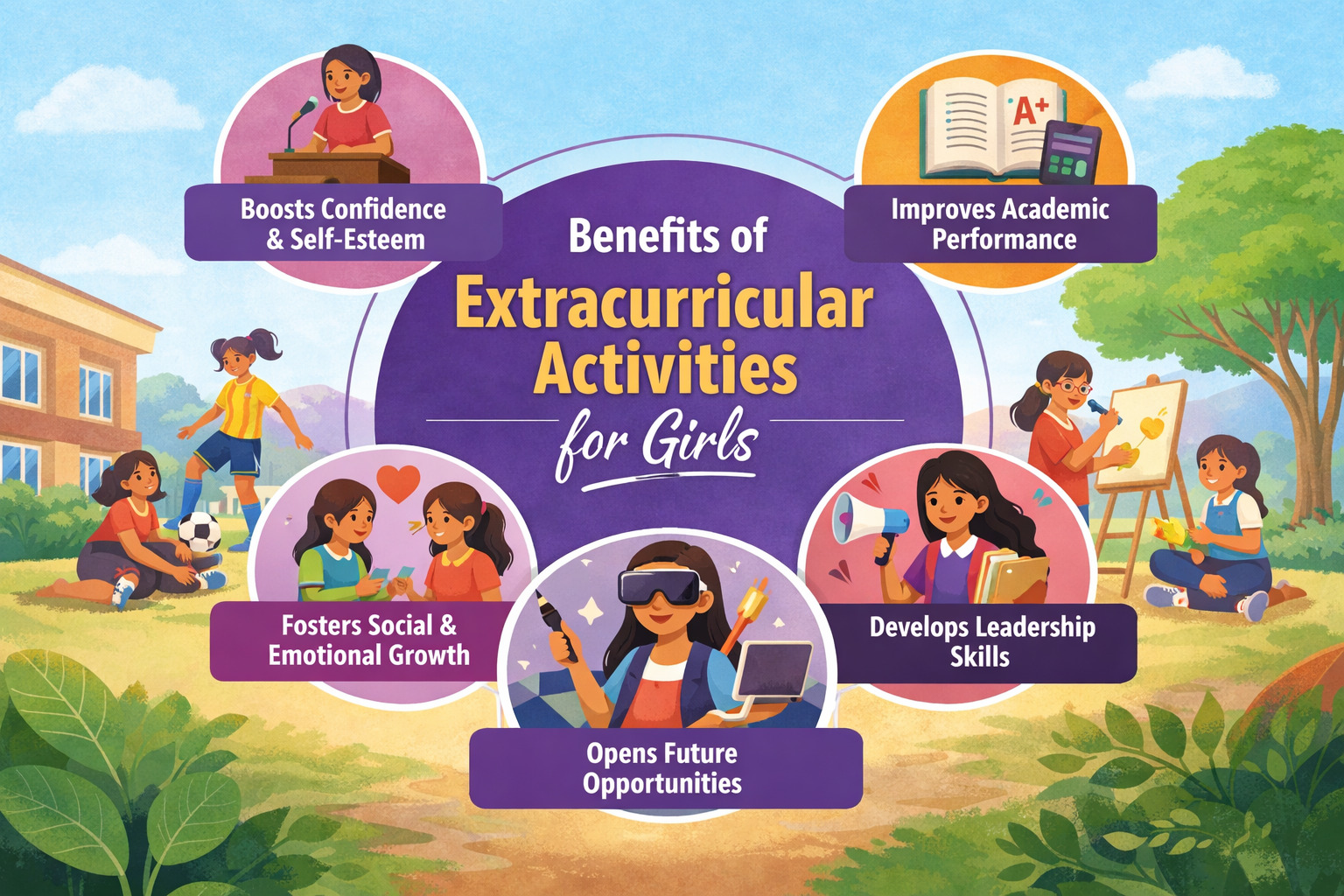
Below are five ways extracurricular activities positively shape girls’ academic journeys and personal development.
1. Strengthening Confidence and Self-Belief
Participation in extracurricular activities encourages girls to step forward, voice their opinions, and recognise their own abilities. Whether performing on stage, playing a sport, or leading a group activity, girls begin to see themselves as capable individuals. This confidence often carries into classrooms and daily life, motivating them to participate actively, take initiative, and aspire for more.
2. Supporting Better Academic Engagement
Contrary to common misconceptions, extracurricular involvement often strengthens academic performance. Structured activities help girls develop discipline, focus, time management, and problem-solving skills—abilities that directly support learning outcomes. More importantly, such engagement fosters a positive connection with school, helping reduce absenteeism and dropout rates, particularly among adolescent girls.
3. Encouraging Emotional and Social Well-Being
Girls often grow up balancing academic expectations with household responsibilities and social pressures. Extracurricular activities provide supportive environments where they can express emotions, form friendships, and feel valued. Through teamwork and shared experiences, girls learn empathy, cooperation, and resilience - skills that are essential for navigating personal and societal challenges.
4. Building Leadership and Life Skills
Leadership is nurtured through experience. Extracurricular platforms allow girls to take responsibility, make decisions, and work collaboratively. Whether organising events, leading teams, or participating in community initiatives, girls gain confidence in their ability to lead. These life skills empower them to become independent thinkers and active contributors to their communities.
5. Expanding Future Opportunities
Exposure to extracurricular activities often opens doors to new aspirations. A girl introduced to technology, sports, or creative arts may discover interests that shape her future education or career path. For many girls from marginalised backgrounds, these opportunities broaden horizons, challenge limitations, and sometimes lead to scholarships or vocational pathways.
Barriers to Access for Girls
Despite their importance, access to extracurricular activities remains limited for many girls in India. Social norms, safety concerns, inadequate infrastructure, financial constraints, and gender stereotypes often restrict participation. Girls are frequently discouraged from engaging in activities perceived as unsuitable for them, reinforcing inequality and limiting their potential.
How The Third Eye Foundation Promotes Holistic Development for Girls
At The Third Eye Foundation, we believe that education must nurture the mind, body, and spirit. Our programmes integrate extracurricular activities into learning environments to ensure girls not only attend school but flourish within it. By working closely with schools, communities, and families, we help create inclusive spaces where girls feel safe, encouraged, and inspired.
Our initiatives include sports programmes, science and digital learning clubs, creative arts, and leadership-building activities. Alongside this, we conduct gender-sensitisation efforts to ensure sustained support from teachers and families, enabling girls to explore their potential without fear or limitation.
Conclusion
Extracurricular activities are far more than recreational pursuits - they are powerful tools for empowerment. They help girls build confidence, challenge stereotypes, and develop the skills needed to succeed in life. When girls are given equal opportunities to learn, play, and lead, they grow into empowered individuals capable of shaping a more just and inclusive society.
By investing in holistic education today, we help create a stronger, more equitable future for generations to come.