

Blood donation is one of the most selfless acts a person can perform. It is a voluntary gift—given not out of obligation or pressure, but out of compassion for those whose lives depend on it. Across India, thousands of patients living with conditions such as thalassemia, blood cancers, hemophilia, or those requiring emergency trauma care, rely on timely blood transfusions to survive.
Despite growing awareness, India continues to face a significant shortage of blood units every year. While millions step forward to donate, the gap between demand and supply remains wide. One of the biggest reasons behind this shortfall is not medical unfitness—but misinformation. Deep-rooted myths and misconceptions often discourage willing individuals from donating blood.
On this occasion, it is important to address and dispel some of the most common myths surrounding blood donation, and replace fear with facts.
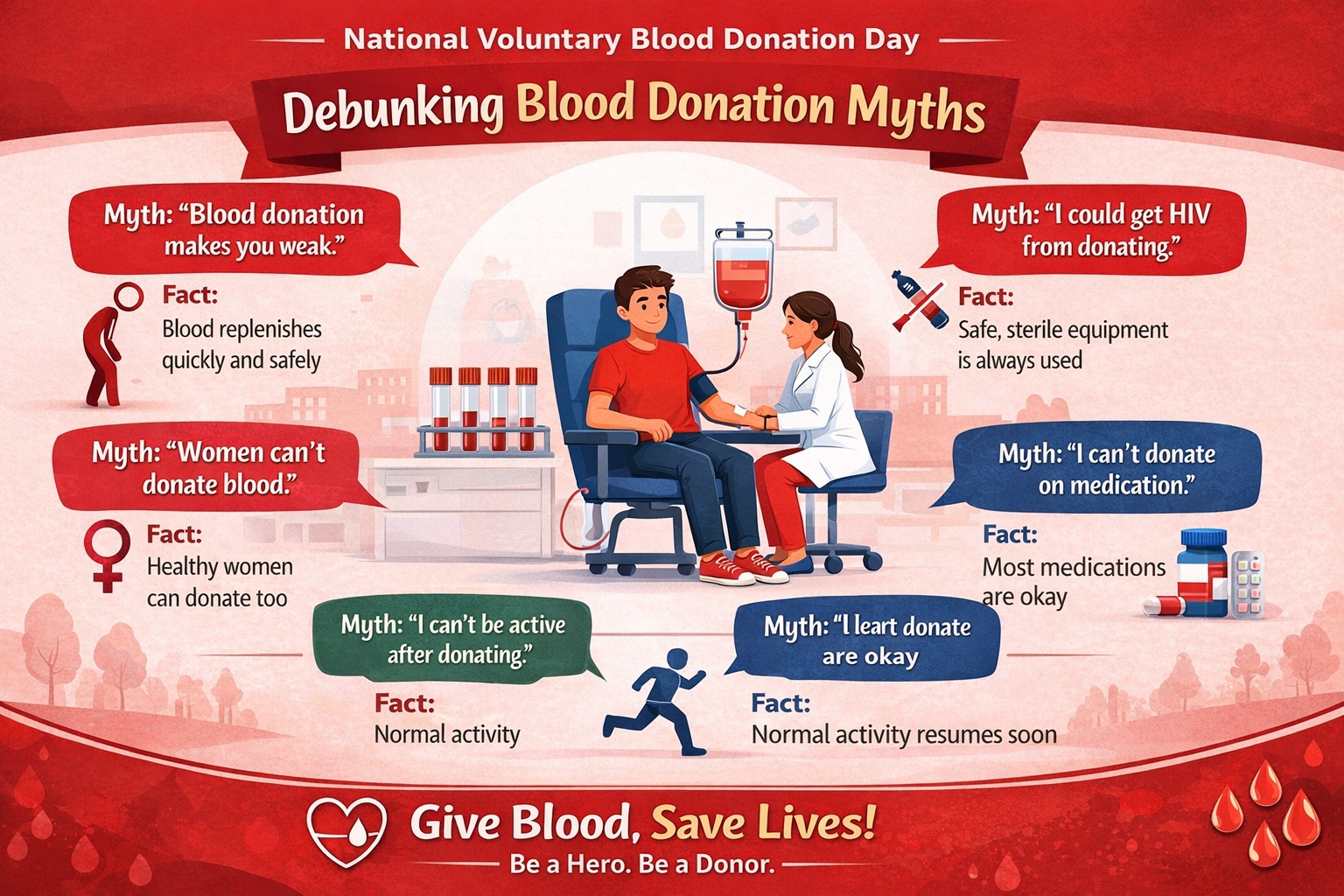
Myth 1: Donating blood will make me weak and harm my health
In reality, the human body is remarkably capable of replenishing the blood donated. During a standard donation, about 350–400 ml of blood is collected—an amount the body naturally restores within a short period with proper hydration and nutrition. Any mild weakness felt immediately after donation usually lasts only a few minutes. Once rested, donors can safely return to their daily routines.
Medical studies also suggest that regular blood donation can support heart health by improving blood circulation.
Myth 2: I won’t be able to play sports or be physically active after donating
Blood donation does not disrupt your lifestyle. Most normal activities—such as walking, climbing stairs, or light exercise—can be resumed within hours. While heavy lifting and intense strength training should be avoided for a few days, light cardio and routine movement are completely safe. With a little care, donors can continue their active lives without interruption.
Myth 3: I could get infections like HIV by donating blood
This fear is common but unfounded. Every blood donation uses brand-new, sterile, single-use needles and equipment. There is absolutely no reuse, eliminating the risk of infection to the donor. Additionally, donors undergo basic health screening before donation, ensuring safety for both donors and recipients.
Myth 4: Women are not eligible to donate blood
Women can absolutely donate blood, provided they meet basic health criteria. Eligibility is determined primarily by hemoglobin levels and overall health—not gender. If a woman is healthy, not underweight, and has adequate hemoglobin, she can donate safely. Menstruation does not prevent donation. However, pregnant women and breastfeeding mothers are advised not to donate during that period.
Myth 5: Being on medication means I can’t donate blood
Most commonly used medications — such as vitamins, supplements, pain relievers, antacids, or oral contraceptives — do not disqualify someone from donating blood. Even those who have taken short-term medications can often donate. Certain medicines, such as antibiotics or psychiatric prescriptions, may require a brief waiting period or medical advice, but they do not permanently prevent donation.
Moving Forward: Building a Culture of Voluntary Blood Donation
The greatest challenge before us is not the lack of donors, but the lack of awareness. By educating communities, addressing fears with facts, and honoring those who donate, we can nurture a culture where voluntary blood donation becomes a shared social responsibility.
Recognizing donors, celebrating their contribution, and spreading positive stories can inspire more people to come forward — again and again. A single unit of blood can save multiple lives. Together, through awareness and compassion, we can ensure that no life is lost due to the unavailability of blood.
Because giving blood is not just a donation — it is a lifeline.